

In my previous blog, I gave an insight about how Maclarg started its laser cutting business and I also shared its 4-year journey with challenges, profitability and suitability. You can read about it here. In this blog, let me share the challenges we faced in our first year of incorporating lasers into our business. I will try to make it simple. In case you want to ask anything you can email me or comment on this blog. I will be happy to reply.
Online challenges:
Trade mark
As we started our journey with selling through online platforms, the big mistake we made was not booking our own trade mark. Let me explain how. We were in the process of making a Kedarnath 3D Wooden Model. We had listed it earlier on Amazon and after some weeks we got our first order. We placed it with a decent amount of profit and it was going good until we realised the problem. What we were making and selling fell under the generic listing categories with no clear brand authorization. Hence, our product ended up being listed simply as a local product. With our Kedarnath 3D model, we achieved the best-selling status. The product was getting popular organically and we were giving a neck-to-neck competition to other sellers. The main drawback, however, was that as the popularity of our product grew, our competitors started fake listings beneath it and sold the same product at lower prices with the same listing. It became a problem as under the generic categories, anyone can bid under your listing. If they put a rate lower than yours, the platform will prioritise their product. This means the fake listers will get the same order instead of us. Due to this, we had to lower our rate to win the bid and also we lost our orders
Returns orders
To explain this, let me give you our example straight. We found that the Home Temple is one of the most trending products on Amazon. We did our RnD and made the best possible product with more modern looking and premium LED features. We listed it and in no time it started selling with everything looking well. We were selling it for around 1250 INR and we started getting 10 orders a day, which was pretty good, I would say. But we didn’t consider and calculate its return cost. It was one feet tall as its shipping charges were nearly 350 INR or above, depending on the location. This meant that after each return, we had to pay the price. Moreover, we witnessed that on every 10 products there were 2-3 returns. Not just that, but the returned product would come in the worst condition. The product could not even be reused as our product was made up of wood so it was not very feasible to ship. After some time, we realised that we sold a decent amount of orders but encountered losses. The customers were loving the product but in online selling, especially through Amazon, you cannot help the return of the product. So you have to calculate the prices keeping in mind the return for every 3 products out of 10.
Talking about the solution, right now, we are shifting our bigger products to a DIY type of configuration where customers can set up their own product at home, following the instructions. This saves us damages and shipping costs a lot and that matters.
Offline Challenges:
In the starting year, we didn’t focus much on offline sales. Mainly, we were getting orders during the Char Dham Yatra season because our catalog was limited and focussed mainly on religious products. Also, we failed to understand there is a difference between selling online and offline. These are two different things:
For instance, you have to be price-conscious if you are selling items to the big wholesaler. You can’t always think about the quality only. You also see the pricing as we all know that India is a price conscious market. If someone is selling the same product for even 1 rupee less than you are, then most of the customers would prefer to buy from the lower price segment market. This does not mean that you stop producing high quality products but I’d just admit that in the starting of the business, the focus should be on keeping the business ongoing and pricing ensures just that. So this is one of the lessons we learnt. Now we focus on getting sales first so that at least we meet our daily expenses. After that, we move on to experimentation.
Catalog:
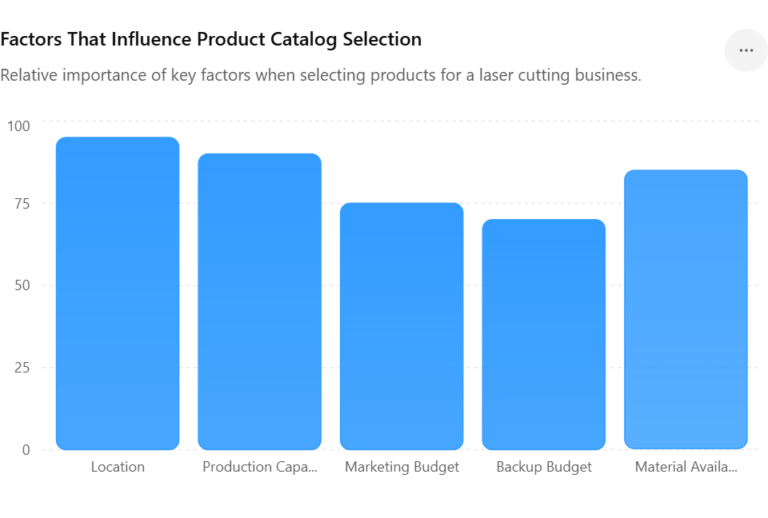
This point is interesting and a lot of us make mistakes here. Catalog not only means the variety of product you have but it also means the right product you can make according to your location or market.
So if we are making a product randomly, it’s hard to sell it. But, if you get the opportunity to make a product which, lets say someone is already making and getting orders for, then you can just copy the product; maybe add a little bit of your touch and start placing the order in the same market.
Here I will give you the two examples of mine:
- We manufacture products in Dehradun, Uttarakhand. Here, the most crucial time period for marketing is during the Char Dham Yatra. People come for pilgrimage and usually buy or take some kind of souvenir with them. Most often, they prefer to buy a product under 100 or 50 INR. In these markets, availability and pricing come higher in priority as compared to quality. We figured this out and started tapping these markets. After 2-3 years, we gained stable retailers on the spots of pilgrimages giving us a good amount of orders every season.
- Secondly, Maclarg started focussing on the education sector in Dehradun, as we know that the city is famous for its colleges and schools. We are now also making trophies and various other products like mementos and souvenirs for many educational institutions in Dehradun.
Finally, I would suggest first to gauge where your business is located and what are the available markets you can tap on so that you can get orders readily.
I’d wrap up this blog urging you to read my previous blog on Maclarg’s journey and challenges. In case of any queries, please comment down or write an email. I’d be happy to assist you.
What an informative blog. Loved reading it. 🌼
Thankyou for showing love