

Hello readers! In the previous blogs, I shared Maclarg’s journey and the challenges it faced after the incorporation of laser cutting or engraving machines. I also shared about our offline and online market experiences, the challenges we faced and how we tackled them. If you are also thinking of trying your hands in the same field, I would recommend you to read those blogs as all these aspects are quite important to run such a business.
For now, let me tell you how we choose our catalog after 4 years of experience in working with laser engraving machines for our business. I will share about our R&D work so that you can get an idea about making your own product catalog. This will also help you to significantly reduce your R&D time and get to the sales as early as possible.
Common Mistakes:
In the phase where you are very new to the nature of business, you often make mistakes, and so did we. As we moved ahead with our enterprise, we did not have proper market access. We did not even know what to make or what would be the best for us. So, we tried making customized MDF clocks, random wall arts, LED wall arts etc. Those products worked fine for us, but we struggled to generate sales after selling 2-3 units of those products. After some time, we realized we need products which can generate regular sales with minimum customization.
If you are interested in learning more about the mistakes we made in the very first year of starting a laser business, you can click here to read a full blog dedicated to it.
How to Decide the Right Product?
After realizing that we can make endless products but they are not going to help us to generate essential sales for business, we started doing R&D on the kinds of products we can make to generate sales. With this, we learned that there are some important factors to keep in mind before making the final catalog. Those are:
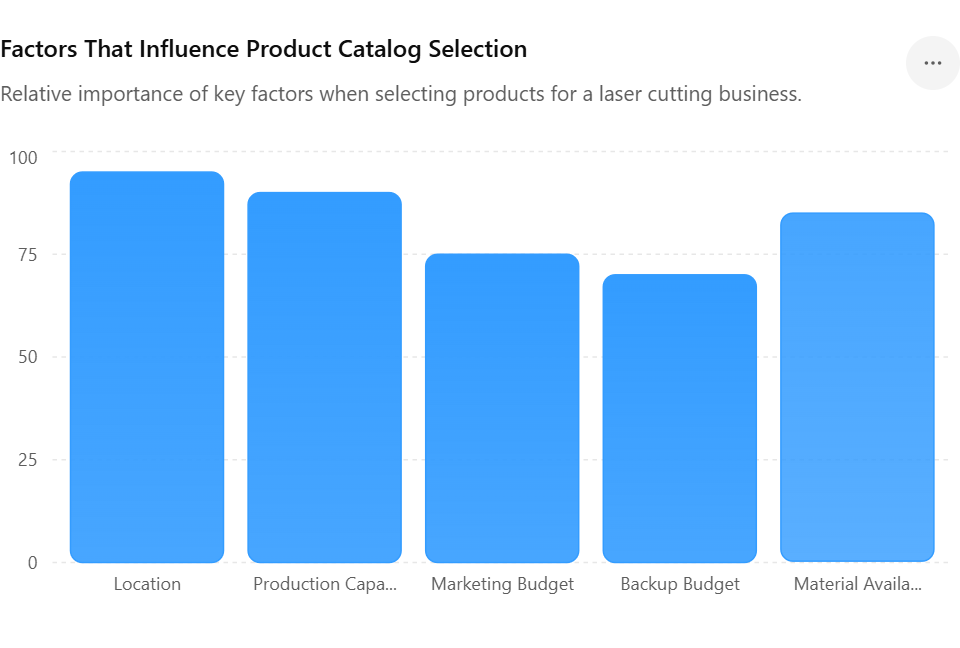
1. Your location and its nature
2. Production capacity
3. Marketing budget
4. Backup budget
5. Material availability
I will explain each point using Maclarg as a case study. This will give you an insight not just for general knowledge but also specifically for laser related businesses like ours.
1. Your location and its nature
2. Production capacity
3. Marketing budget
4. Backup budget
5. Material availability
Your Location and its Nature
This is one of the main factors responsible for shaping your business. If you understand it and do a proper R&D, half of your problem can be solved. If you are a regular visitor on our blog, you probably know that we currently have a manufacturing plant in Dehradun and that itself is a very strategic location for us. To have a unit in Uttarakhand where most of the state revenue comes from tourism, especially during Char Dham Yatra, turned out to be a blessing in disguise for us. If you are also based in a tourist destination and want to cater to the population of tourists in your place, you can google how many tourists are visiting your place and then start making souvenirs and other items for them accordingly.
a. Example of Kedarnath:
Taking the example of Uttarakhand state, approx 50K tourists visit Kedarnath per day, according to the state govt data.
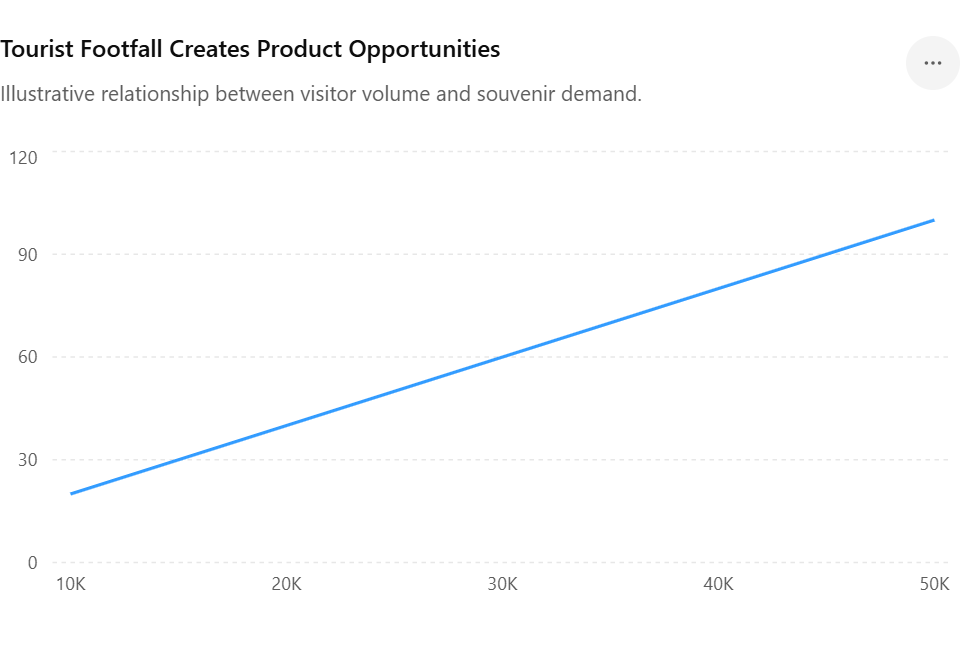
The influx of tourist visitors means that if they are visiting, they are definitely going to buy some kind of memory to take with them. We understood that and started making Kedarnath temple MDF products, selling them to the local vendors of the nearby places; and that definitely started working for us.
b. Example of Educational Institutions:
Dehradun is also an education hub for students and hence many renowned colleges, schools, institutes, etc are located here. So, we started making products to cater to these institutes like wooden trophies, momentos, customized 3D architecture of colleges, etc. The institutes loved that for the first time someone was producing the 3D models of their buildings which they could gift to their important guests.
Likewise, you can see what you can make according to the location of your business.
The following list will help you to determine the nature of your location:
1. Tourist friendly
2. Educational friendly
3. Corporate sector friendly
4. Govt sector friendly
5. Wholesale hubs like Delhi, Mumbai, Surat, etc.
Now, determine the nature of your location and make the product according to it. I hope after this, you will get a satisfactory amount of orders to make your business stable. If you want me to write more about the factor of the nature of state or location, then comment below or email me at maclargindia@gmail.com. I would love to write about this. As of now, I hope you have got some idea about how to start your R&D.
2. Production Capacity
Every business has a different capacity of production and that is the second most important factor for the enterprise. I have placed this second because it’s important to consider it in the first year of your business. Later on, you can increase your capacity gradually.
Production capacity is a key factor because it will help you decide which segment of market you can play with. This can help you in calculating the cost of your product – another important factor which can alter the profit margin significantly. Determining the profit margin is essential because all the expenses of your business, like rent, electricity, etc., are usually constant factors related to this variable factor. It determines how cost efficient your product is.
Now let’s understand this with Maclarg’s example:
You should keep in mind that no product is one single product. You can play with the sizes and detailing of one product and manipulate the price, production time and cost, etc. Let me explain it with the example of the Kedarnath 3D model which we make. The mistake that we made, just like many other retailers, was to try and make the cheapest product which is already selling or is made by a lot of makers. So, even after a year of production and sales, we found our product making a very low profit margin. We could barely make any profit and sometimes we had to reduce our selling price because we were directly competing with much bigger players who were making huge profit with the same products. At times, we faced loss in sales and suffered with the constant flow of money which is essential for any business on its initial stage.
Now the question is, how to overcome this challenge? One can do that by simply adding a USP (unique selling Prospective) to their product. In this way, we present something new to the customer, independent of the product already circulating in the market. This helps us to decide our own price which will not directly depend on the quantity but the quality and the USP of the product.
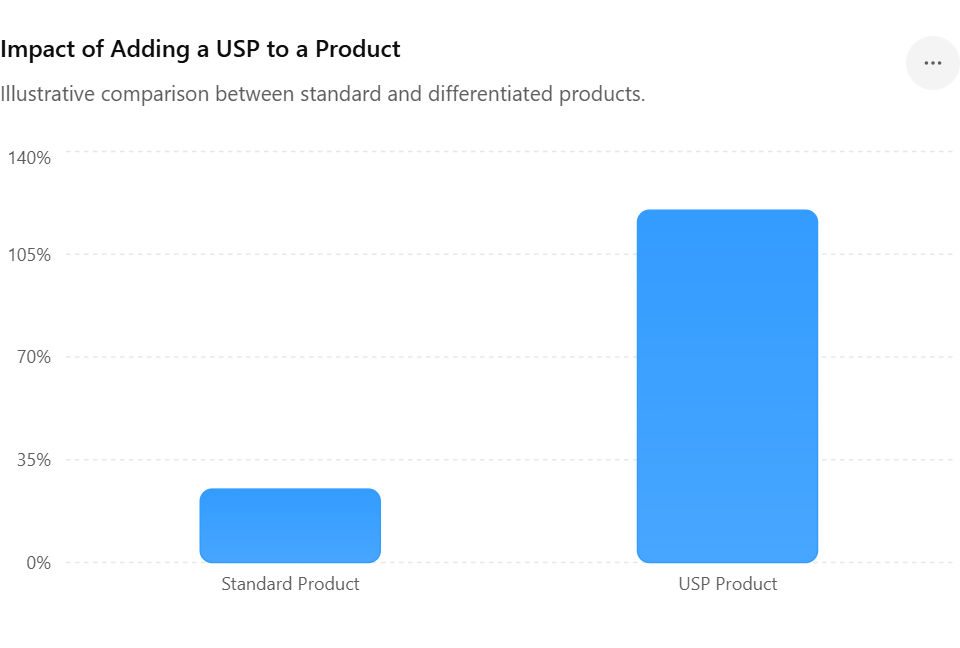
This helps us to decide our own profit margin which will not directly depend on the quantity but the quality and the USP of the product.
We implemented this model with a modern LED setup in our Kedarnath product and made it a little bit unique for the buyer. This strategy opened doors for us in the competitive market of Kedarnath. After its success, we started making new product designs by just modifying the ideas around the original product without copying the original. Now, we are able to sell our product into the market without compromising the profit margin. One thing to note here is that this is an enduring process which means that each year we have to make a new design for the market. This is because the previous model is bound to be copied by the big manufacturers if it is getting reasonably good sales and you cannot stop it. But anyhow, it solves our problem.
In later years, we had increased our production capacity enough and now, we are able to sell high-demand low price tag products in bulk amounts.
3. Marketing Budget
In the early phases of business, having very less marketing budget is not surprising. For some, it can even be zero, just like in our case. In this case, you can skip this part for some time. First, start making an offline effort, as I mentioned in the above two points, and get some real sales, improving your product and design.
For those businesses who have the marketing budget, the important question is: where and how to spend that budget? You may spend this amount on paid Meta or Google ad campaigns. Make sure to target those products online which can open up another wide channel window for you. I will surely cover this topic in detail in my upcoming blogs.
4. Backup Budget
When I say Backup Budget, it means the number of days or weeks you can wait for your payment after receiving the orders.
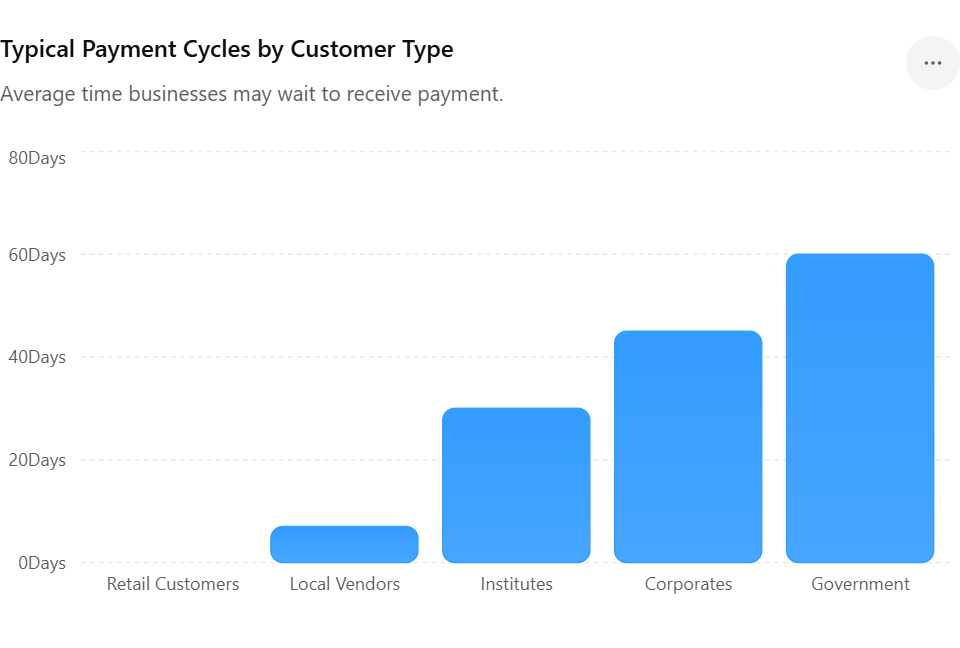
Now understand the importance of this point with an example. After R&D and Brainstorming for our first phase of business, as mentioned earlier, we totally ignored the backup budget and started approaching govt offices, corporates and colleges for orders. It was only after the delivery of the product that we realised our payments were getting delayed. We found out that buyers may take even more than a month to clear the bills. This became a major issue for the smooth functioning of our business. So, I would recommend you, if you are working with big organisations and selling them products in bulk, always keep in mind to deal with only those buyers who are willing to pay you at least 50% of the amount in advance after finalising the order. The remaining amount must be paid after receiving the order. This one point is often overlooked by many beginners in business.
My recommendation is to opt for in-between approaches or just try to follow the first approach which I mentioned above. As you get familiar with your clients, you will get an idea which of them are trustworthy and can be given products on credit. In this way, you can increase your sales without compromising your business with respect to financial crunch.
5. Material Availability
Buying the right raw material is one of the important factors involving expenditure in any business. We often ignore this factor and end up buying the wrong material which leads to a disturbed business cycle. Now let’s understand this with the example of Maclarg’s operations. Maclarg takes into account two factors while buying its raw material: Local Vendors and Material Availability.
Local vendors can provide you the material even if its rate is a little higher than what you usually get from big dealers and wholesalers. This is viable because for instant and small bulk orders, you can also charge a little bit higher than usual from your customers.
The material availability seems simple but also a bit complicated at the same time. Let me explain why it is so. In the early phase of business, people have limited financial sources so it’s important to make such products for which raw material is easily accessible. If you are doing customization work which is related to laser, I assure you that you will get instant orders with just one or two days’ preparation time. Buyers will not even give you enough time to buy the raw material. Therefore, you have to figure out the kind of raw material which you can pile up beforehand and is always available to you as you receive orders. This raw material has to be the items which can be used in most of your products to avoid losses and unnecessary expenditure.
In the beginning, we also encountered the same problem and started exploring our options. Now, we are at a stage where we don’t even have to pile up raw material and still we manage to handle most of our instant orders.
Apart from these 5 points, there is a lot to keep in mind while making your own product catalog. Here, I have shared the most important points to keep in mind in the early phase of a laser business.
Finally, I hope you found it helpful and gained a significant amount of knowledge for making your product catalog. I will also cover my top selling products in the upcoming blogs. I request you to keep reading my blogs as I’m on a mission to cover all the important things here related to running my business, Maclarg.
You may post your queries in the comment section or mail them to me at maclargindia@gmail.com.
You inspire me to start my own business. 🌼